
A Guide to Backup CPAP Batteries | Traveling with Sleep Apnea
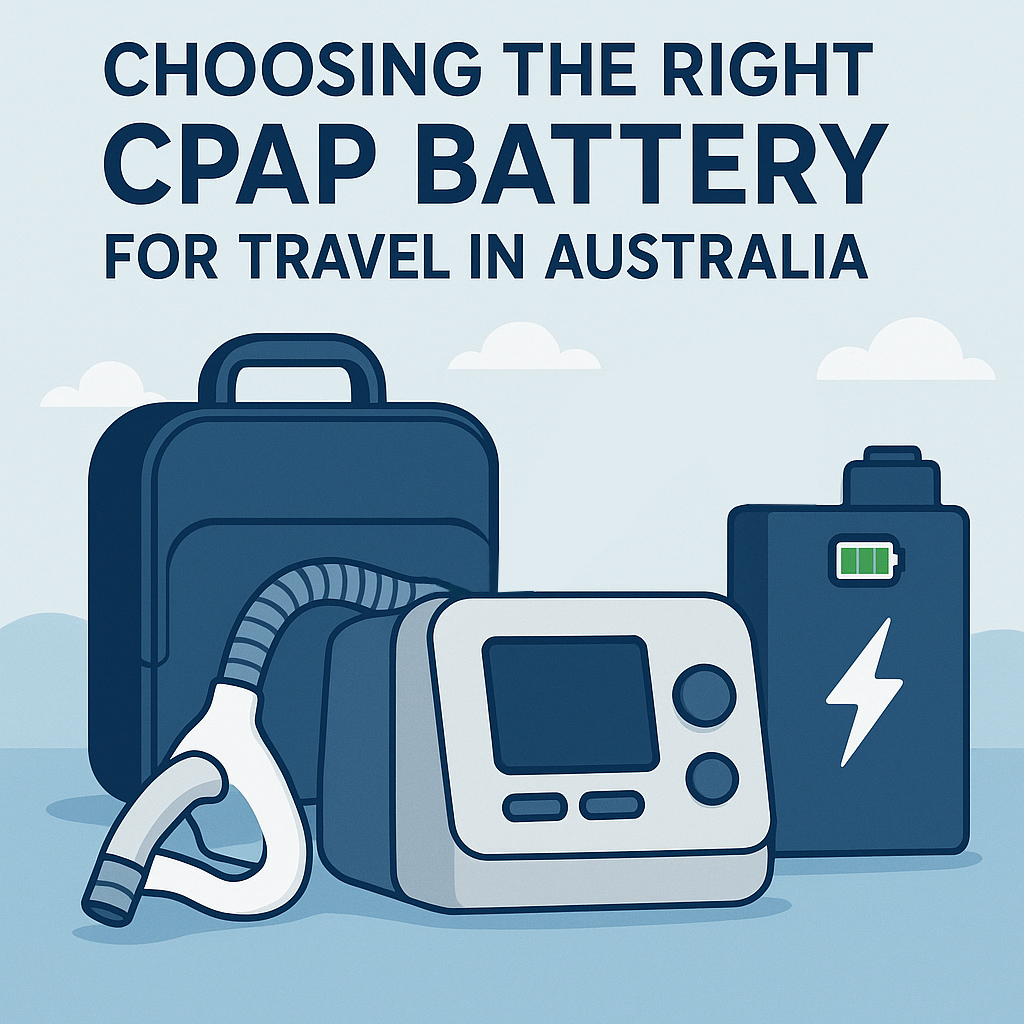
Sleep Soundly Anywhere: A Complete Guide to CPAP Backup Batteries
If you rely on a CPAP machine to manage sleep apnoea, you already know the difference good therapy makes—deeper rest, better focus, and all-day energy. But what happens when the power goes out, or you’re off on a trip with no guarantee of electricity?
That’s where a CPAP backup battery comes in. Modern portable batteries have made enormous strides in recent years, giving you uninterrupted therapy whether you’re at home during a blackout, camping under the stars, or flying halfway around the world. This guide walks you through why a backup power source matters, key features to look for, and practical tips to get the most from your battery.
Why Every CPAP User Needs Backup Power
Continuous therapy is vital for quality sleep and long-term health. Missing even a single night can leave you tired and increase health risks. A reliable CPAP battery protects you in common scenarios such as:
- Power outages – Storms, grid failures, or maintenance can cut power without warning. A dedicated CPAP battery keeps your machine running. Many models even switch automatically to battery power during short outages.
- Camping and caravanning – Spend nights in nature without sacrificing your treatment.
- Travel – Different plug types, distant outlets, or long-haul flights no longer have to interrupt your therapy. A lightweight battery means peace of mind wherever you go.
Key Features to Consider
When choosing a CPAP backup battery, think about how and where you’ll use it. Balancing runtime, size, and cost will help you pick the best fit.
1. Runtime
Look for at least eight hours of continuous power so you can get a full night’s sleep. Multi-day campers may prefer a larger capacity or even add a solar panel to recharge off-grid.
2. Compatibility
Confirm the battery suits your exact CPAP model. Each machine draws power differently, and the right match ensures safe, efficient operation.
3. Size and weight
Frequent flyers or hikers may want an ultra-portable design. If you’ll mostly use it at home for emergencies, a larger, higher-capacity battery might make more sense.
4. Charging flexibility
Many modern units recharge from wall sockets, 12-volt car outlets, or solar panels, and some can top up other devices like phones or laptops.
5. Airline approval
Most airlines allow lithium batteries up to 100 Wh in carry-on, or up to 160 Wh with pre-approval. Always check with your carrier in advance and carry documentation such as an FAA compliance notice and a doctor’s note if required.
Popular CPAP Battery Options
Here are well-regarded models you might showcase in your store:
- Medistrom Pilot-24 Lite – Super compact (around 0.58kg) and offers up to two nights of power. Compatible with solar panels for extended trips.
- Medistrom Pilot-12 Lite Super compact (around 0.58kg) and offers up to two nights of power. Solar panels are be connected to this battery. Compatible with solar panels for extended trips.(Dreamstation and SystemONE machines only).
- Medistrom Flex - Super compact (around 0.54kg) and offers up to two nights of power with USB C port. Compatible with solar panels for extended trips.
- Explore Mini - Super compact (around 0.45 kg) and offers up to two nights of power. Solar panels are be connected to this battery. Compatible with solar panels for extended trips.
- Explore 5500 – Lightweight (approx. 3 lb) with up to 21 hours of runtime; compatible with solar panels for extended trips. Compatible with solar panels for extended trips.
- Dreamstation Travel - External battery built exclusively for Philips Dreamstation and System ONE CPAP machines
- ResMed RPSII-V2 - External battery built exclusively for ResMed CPAP machines. This battery provides a reliable power source for the AirSense™ and AirCurve™ series
Getting the Most from Your Battery
- Optimise settings – Turning off heated tubing or humidification (if medically acceptable) conserves power.
- Use a DC cable or inverter wisely – Direct DC use is more efficient, while a quality inverter ensures stable AC power if needed.
- Maintain regularly – Keep contacts clean, inspect for wear, and store in a cool, dry place.
- Charge and plan ahead – Always fully charge before a trip and, if possible, pack a spare.
- Consider solar – A foldable solar panel can top up your battery on multi-day outdoor adventures. The Medistrom Pilot-24 Lite , Medistrom Pilot-12 Lite, Medistrom Flex , Explore Mini and the Explore 5500 are compatible with solar panels for extended trips.
Travel Confidence
Your CPAP machine counts as medical equipment, so airlines typically won’t count it as a carry-on bag. Still, double-check airline policies and carry the proper paperwork for a smooth journey.
Rest Easy—Wherever Life Takes You
A CPAP backup battery isn’t just a convenience; it’s essential for uninterrupted therapy at home and away.