
How to stop cpap mask from leaking
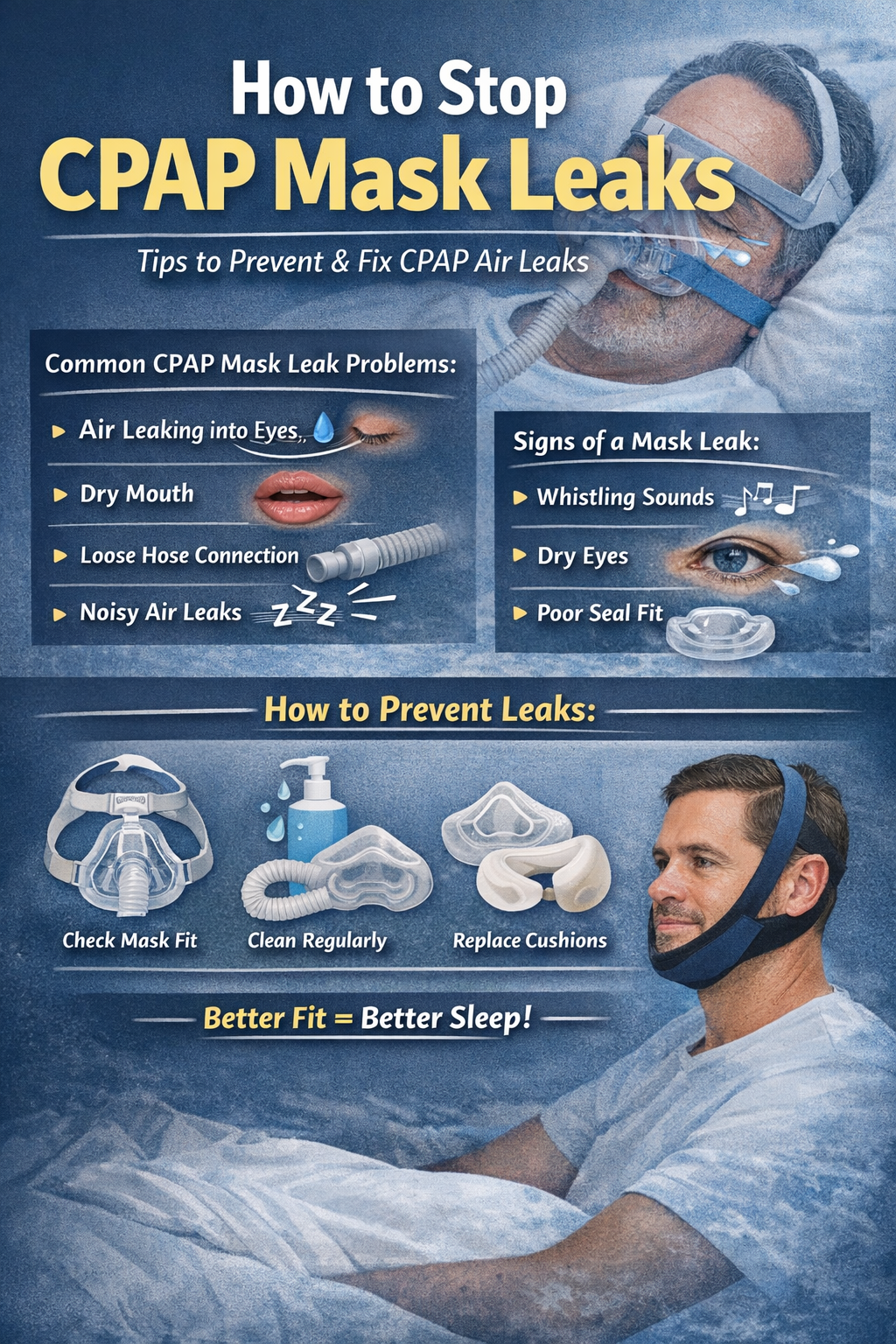
How to Stop CPAP Mask Leaks – Causes, Signs and Solutions
Air leaks are one of the most common issues experienced by CPAP users. Leaks can occur around the nose, into the eyes, through the mouth, or at the hose connection. If not addressed, mask leaks can reduce the effectiveness of your CPAP therapy and make treatment uncomfortable.
In this guide, we explain the dangers of CPAP mask leaks, how to identify the cause, and the best ways to fix the problem.
Why CPAP Mask Leaks Are a Problem
A leaking CPAP mask can significantly reduce the effectiveness of sleep apnea therapy. When air escapes from the mask, the machine may no longer deliver enough pressure to keep your airway open. This can lead to poor sleep quality and ongoing sleep apnea symptoms.
Common problems caused by CPAP mask leaks include:
- Reduced therapy effectiveness
- Interrupted sleep
- Dry mouth or dry nose
- Air blowing into the eyes
- Noise that disturbs you or your partner
- Skin irritation around the mask
- Increased likelihood of stopping CPAP therapy
Fixing mask leaks early helps ensure your therapy remains comfortable and effective.
How to Tell If Your CPAP Mask Is Leaking
CPAP mask leaks can appear in different ways depending on where the leak is coming from. Here are some common signs to look for:
Leak Location Clues
- Air leaking near the eyes – Mask may not be sealing properly around the nose bridge
- Air leaking from the mouth – Common when using a nasal mask and breathing through the mouth
- Leak at hose connection – Loose tubing, worn connectors, or damaged hose
- Leaks at the sides of the mask – Mask may be too loose or the wrong size
When the Leak Happens
- Leaks immediately when putting the mask on – Mask may be the wrong size or fitted incorrectly
- Leaks during the night – Headgear may shift when you change sleeping positions, or cushion seal weakens over time
Other Signs
- Dry eyes
- Dry mouth in the morning
- Whistling or hissing sounds
- CPAP machine showing leak alerts
- Pressure feels weaker than normal
Identifying these signs early helps you find the cause and fix the issue quickly.
How to Fix CPAP Mask Leaks
1. Make Sure Your Mask Fits Properly
Choosing the correct mask size and style is the most important step. A mask that is too large or too small will leak even if the straps are tight. You may need to try different mask types such as:
- Nasal mask
- Nasal pillow mask
- Full face mask
2. Clean Your Mask Daily
Face oils and dirt can prevent the mask cushion from sealing properly. Wash your mask cushion daily using mild soap and warm water, then allow it to air dry.
3. Replace Worn Parts
CPAP cushions, headgear, and tubing wear out over time and can cause leaks. Replacing cushions every 3–6 months helps maintain a good seal.
4. Use a Chin Strap
If you use a nasal mask but breathe through your mouth at night, a chin strap can help keep your mouth closed and reduce leaks. Some users may benefit from switching to a full face mask instead.
Choosing the Best CPAP Mask to Prevent Leaks
The best mask for preventing leaks depends on your breathing habits and sleeping style:
| Mask Type | Best For |
|---|---|
| Full Face Mask | Mouth breathers or blocked nose |
| Nasal Mask | Most users |
| Nasal Pillow Mask | Light sleepers and side sleepers |
Mask cushion material also makes a difference:
- Silicone cushions – Durable and flexible
- Memory foam cushions – Softer and better facial seal for some users
A properly fitted mask that suits your sleeping style will greatly reduce leaks and improve comfort.
Final Thoughts
CPAP mask leaks are common, but they are usually easy to fix. By choosing the right mask, keeping it clean, replacing worn parts, and making small adjustments, you can reduce leaks and make your CPAP therapy more comfortable and effective.
Better mask fit means better sleep, better therapy results, and better long-term health.